
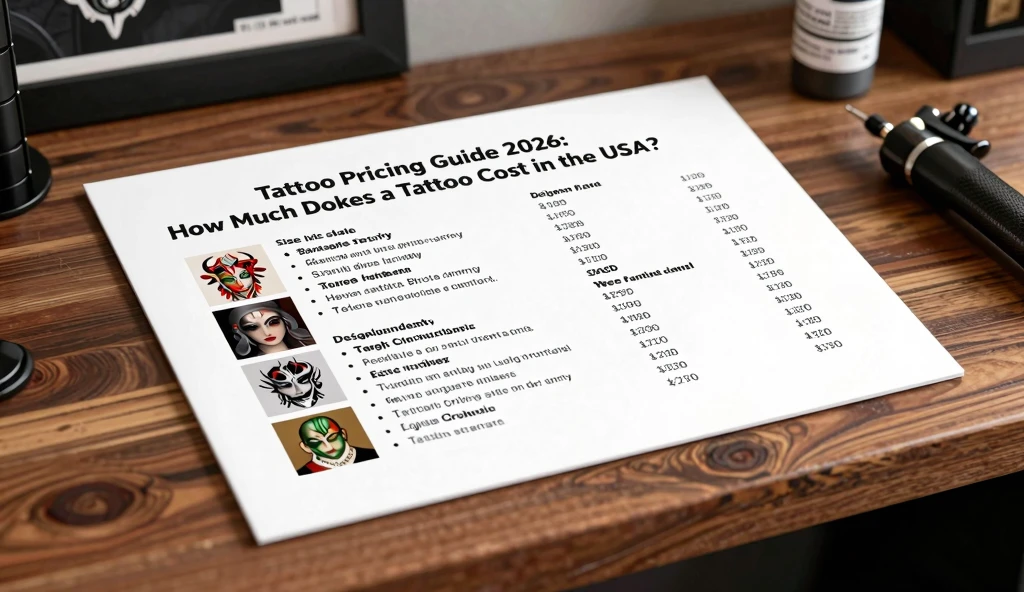
Summary :Understanding tattoo pricing in 2026 requires a shift from viewing ink as a simple service to recognizing it as a high-stakes body art investment. The average tattoo cost USA is no longer a static number but a dynamic calculation based on technical precision, clinical safety, and artistic reputation. Whether an artist utilizes a tattoo artist hourly rate or a full day session price, the cost reflects the invisible labor of design, the high overhead of medical-grade sterilization, and the premium quality of organic vs. standard inks.
Key factors such as skin elasticity and texture and the choice between micro-realism vs. traditional styles dictate the “needle-to-skin” time, while hidden expenses like non-refundable deposits and custom design fees ensure a professional and committed experience. Geography also plays a massive role, with metropolitan hubs commanding higher rates than boutique suburban studios. Ultimately, the industry has evolved to prioritize transparency, where consultation fees and clear booking security protocols protect both the creator’s time and the client’s vision.
Table of Contents
Understanding the Core: How Tattoos Are Really Priced
True tattoo pricing is an intricate calculation that balances the artist’s literal time with their decades of accumulated technical mastery. You aren’t just paying for a bottle of ink or a sterile needle; you are paying for a professional’s deep anatomical study. A seasoned expert understands precisely how skin elasticity and texture affects how fast an artist can work during a high-stakes session. This mechanical knowledge is vital because different body parts absorb ink at varying rates, requiring a specialized touch to avoid scarring or “blowouts.” When an artist looks at your skin, they are assessing the canvas’s durability and how it will hold a specific pigment over twenty or thirty years.
Beyond the visible artistry, your financial commitment funds a sanctuary of clinical safety that mirrors a modern surgical suite. Top-tier American studios invest thousands of dollars annually in medical-grade sterilization equipment, including state-of-the-art autoclaves and disposables to eliminate every possible health risk. These invisible sanitation costs are fundamental to the average tattoo cost USA, ensuring that your healing process is smooth and free from medical complications. Furthermore, the studio’s overhead includes high-rent locations, specialized lighting, and ergonomic furniture designed to keep you comfortable during six-hour sittings. When you see a higher price tag, you are buying the insurance of a strictly regulated, hospital-clean environment where your health is the absolute priority.
Popular Tattoo Pricing Methods: Hourly vs. Flat Rates
In the professional landscape of 2026, the tattoo artist hourly rate remains the most common and transparent way to bill for custom creative labor. This method ensures that the artist is fairly compensated for the exact needle-to-skin time required to execute a complex vision. Hourly rates in major US hubs usually range from $150 to $500 depending on the creator’s fame and demand. However, for smaller, pre-designed pieces, many shops utilize a flat rate per piece. This is frequently used for flash or small designs where the artist knows exactly how long the process will take, providing the client with a predictable cost from the very start. Flat rates remove the anxiety of a ticking clock, allowing the collector to relax and focus entirely on the experience.
For collectors embarking on massive transformations like a full leg or back, many studios now offer a half-day rate or a full day session price. A half-day rate is often best for medium-sized projects like a detailed forearm piece or a calf wrap, usually spanning four to five hours. Stepping up to a full-day session allows the artist to enter a “flow state,” tackling large background shading or intricate linework in a single, dedicated block of time. This bulk pricing often provides a slight discount compared to standard hourly billing, making it a savvy choice for serious body art investment. These structured options allow you to plan your long-term budget while ensuring the artist has the focused time needed to deliver a world-class result without rushing the delicate process.
| Pricing Category | Typical Project Scope | Estimated USA Cost (2026) |
| Tattoo shop minimums | Small symbols, names, or tiny icons | $80 – $200 |
| Tattoo artist hourly rate | Custom sleeves, realism, or shading | $150 – $450 per hour |
| Half-day rate | Medium outer-arm or thigh pieces | $600 – $1,200 |
| Full day session price | Full back, chest, or leg sleeves | $1,500 – $4,000+ |
5 Key Factors That Tattoo Pricing Directly Affect Your Tattoo Cost
The specific aesthetic style you choose is a massive driver of the final bill because different techniques require vastly different levels of mental and physical labor. There is a profound gap in micro-realism vs. traditional style-based pricing variations because realism requires thousands of tiny needle pokes to create a photographic effect. Conversely, a fine line technique requires high precision and specialized needles to maintain a delicate, “jewelry-like” appearance without the lines thickening over time. Furthermore, if you desire intricate geometric patterns, you are paying for time-intensive symmetry that leaves zero room for error. One millimeter of misalignment can ruin a geometric sleeve, so artists charge a premium for the extreme concentration and mathematical planning required for these pieces.
Material quality is another factor that separates high-end studios from budget storefronts in the American market. Leading professionals prioritize pigment quality by investing in organic vs. standard inks that are tested for long-term safety and color retention. These premium inks resist the “fading to blue” effect that plagued older tattoos, ensuring your body art investment stays vibrant for life. Additionally, if you are booking a world-renowned creator who doesn’t live in your city, you may encounter a travel fee for guest artists or conventions. This fee covers the artist’s logistics and ensures you can access elite talent without flying across the globe yourself. Every detail, from the brand of the needle to the brand of the ink, contributes to a safer and more beautiful permanent result.
Hidden Costs of Tattoo Pricing: Why It’s Not Just About the Time on Chair
Your financial journey starts the moment you reach out to a professional, often beginning with a non-refundable deposit that acts as your booking security. This deposit protects the artist’s calendar and compensates them for the time they spend communicating with you before the appointment. Some elite studios also require a consultation fee for professional advice pricing, especially for complex cover-ups or massive anatomical projects. This fee covers the expert eye needed to assess your skin’s condition and determine if your vision is technically possible. These initial steps are vital because they establish a professional foundation for the project and ensure that both the artist and the client are fully committed to the long-term goal.
Creating a one-of-a-kind, custom masterpiece involves significant custom design fees for the hours of “invisible labor” performed outside of the shop. Most artists spend their evenings sketching, researching references, and perfecting stencils long before the machine ever touches your skin. This mental labor is a huge part of the tattoo artist hourly rate logic, even if you don’t see it happening in real-time. Additionally, you must budget for high-quality professional aftercare products, such as medical-grade bandages and specialized healing ointments. Using the wrong soap or lotion can ruin a $2,000 tattoo in a matter of days. Investing in these specialized supplies is the final, essential step in protecting your body art investment and ensuring that the healed result looks exactly like the fresh one.
Tattoo Value vs. Price: Is a Cheap Tattoo Worth It?
In the world of permanent body art, searching for a “deal” is almost always a recipe for a very expensive mistake. Low tattoo pricing usually indicates that an artist is cutting corners on safety, using low-quality pigments, or simply lacks the technical skill to execute a clean design. A “cheap” tattoo often results in “ink drift” or deep scarring, which can be incredibly painful and ugly as it heals. You might save $200 today, but you will likely spend $2,000 later on laser removal sessions or a complex cover-up from a master artist. True value is found in an artist’s artistic mastery, not in their ability to offer a discount, because a masterpiece is forever while a bargain is temporary.
“A quality tattoo is a luxury item that appreciates in sentimental value as it ages, whereas a cheap tattoo becomes a permanent burden on your self-confidence.” — Modern Tattoo Collector.
Professional Body Art: Face Paint and Temporary Ornamentation
Temporary body art provides a fascinating and low-commitment way to explore the world of body ornamentation for special events. Unlike the permanent nature of a needle, professional face painting or body art uses FDA-approved cosmetic pigments that wash off with soap and water. The pricing for these services is usually based on a flat hourly rate for the artist’s time, making it a popular choice for festivals, photoshoots, or high-fashion runways. Because these materials are applied to the surface of the skin, they don’t involve the same risks as a tattoo, but they still require a high level of pigment quality to ensure the skin doesn’t react poorly to the paint. It’s a beautiful way to transform your look for a day without the lifetime financial or physical commitment of ink.
Regional Pricing Examples: Tattoo PricingFrom Dallas to Global Markets
The city you choose for your appointment can swing your average tattoo cost USA by hundreds of dollars due to local economic factors. In major metropolitan hubs like New York, Los Angeles, or Dallas, the cost of living and studio rent is significantly higher, which pushes the tattoo artist hourly rate toward the $300-$500 range. However, if you travel to a smaller “boutique” studio in a suburban or rural area, you might find world-class talent at a more accessible price point. This geographic variation is a key part of local market trends, reflecting the reality that artists are also small business owners who must cover their own overhead. Always research the local economy of your chosen destination to ensure your budget aligns with the standard rates of that specific region.
Preparation and Booking: How to Get an Accurate Quote
The most effective way to secure a firm and fair quote is to enter the booking process with total transparency and clear details. Always provide high-resolution reference images and specify the exact size of the project in inches or centimeters to help the artist estimate the time. Be honest about the specific body placement, as tattooing a ribcage or a neck is far more difficult and time-intensive than tattooing a flat forearm. Clear communication at the start prevents “sticker shock” on the day of the appointment and helps the artist prepare the correct supplies for your unique skin type. A professional shop will appreciate your organization and will be able to provide a much more accurate tattoo pricing breakdown based on your specific needs.
Tipping Etiquette: How Much Should You Tip Your Artist?
Tipping is a deeply respected tradition within the American tattoo industry and acts as a direct “thank you” for the artist’s physical and mental strain. Standard etiquette suggests a tip of 15% to 20% of the total cost, especially if the artist went above and beyond to make you comfortable. This gratuity often goes toward the artist’s personal tool fund or their own health insurance, as many are independent contractors. Tipping is the best way to foster a strong professional relationship with a creator you admire, ensuring that you are a “preferred client” for future sessions. It is a gracious acknowledgment of the custom art experience you’ve just received, marking the successful completion of your body art investment.
Conclusion: Making an Informed Investment in Your Body Art
Approaching your tattoo as a major life investment is the only way to guarantee a result that brings you joy for the rest of your life. Never rush into an appointment based on a low price or an immediate opening; instead, wait for the artist whose portfolio truly speaks to your soul. High-quality body art is a collaborative journey that rewards those who value artistic mastery, pigment quality, and clinical safety above all else. When you respect the artist’s time and their technical expertise, you walk away with more than just ink on your skin—you walk away with a piece of history. Invest in yourself, invest in your skin, and let your body become the masterpiece it was always meant to be.
Choosing to undergo a permanent skin transformation is one of the most personal financial decisions you will ever make. As this guide illustrates, the true value of a masterpiece far outweighs the initial tattoo pricing tag. By prioritizing artistic mastery over a “bargain” deal, you avoid the physical and financial pain of laser removals or low-quality cover-ups. A healthy approach to your body art investment involves researching local market trends, respecting tipping etiquette, and investing in professional aftercare to preserve your ink for a lifetime.
In 2026, the most successful collectors are those who treat their skin like a world-class gallery. When you pay for high pigment quality, time-intensive intricate geometric patterns, and a sterile environment, you aren’t just buying a tattoo—you are buying a piece of history that breathes with you. Take the time to find an artist whose style resonates with your soul, prepare your budget with realistic expectations, and step into the studio with the confidence that your new artwork is a legacy worth every cent.
FAQs
How much does a typical tattoo cost in the USA in 2026?
The average tattoo cost USA varies significantly based on complexity, but most professional tattoo shop minimums start between $80 and $200. For custom or large-scale work.
Why do some artists charge a flat rate instead of an hourly rate?
A flat rate per piece is commonly used for flash or small designs where the artist knows exactly how long the process takes. This method provides a predictable cost for the client and allows.
What is the difference between a half-day and a full-day session price?
A half-day rate is usually best for medium-sized projects like a forearm piece, while a full day session price covers massive transformations like back pieces.
Do I have to pay for the time the artist spends drawing my design?
Yes, most professionals include custom design fees or a consultation fee to cover the “invisible labor” of sketching and researching. These professional advice pricing costs ensure your stencil is a unique masterpiece specifically tailored to your skin elasticity and texture.
Is a deposit required to book a tattoo appointment in 2026?
Most reputable studios require a non-refundable deposit to serve as your booking security and lock in your calendar slot. This fee is typically deducted from the final tattoo pricing.