
Summary :Navigating the American skies involves much more than just mastering flight controls or understanding complex weather patterns. To fly with true peace of mind, you must secure a robust Financial Protection plan that acts as a primary shield for your Aviation Assets. This Ultimate Guide to Aircraft Insurance in the U.S.: Top Companies & Coverage Options serves as your comprehensive radar for the current insurance landscape. Whether you are a weekend hobbyist flying a piston-single or a corporate manager overseeing a multi-million dollar fleet, understanding how to mitigate the high-velocity risks of aviation is a non-negotiable requirement for every Pilot in Command (PIC).
The core purpose of this guide is to simplify the Aviation Underwriting process and help you identify the market leaders that dominate the industry. By understanding the difference between a standard Deductible and specialized Policy Endorsements, you can tailor a plan that fits your exact mission profile. In 2026, the complexity of General Aviation (GA) insurance has evolved, making it paramount to choose a partner that truly understands your unique wings. Let’s dive into how Risk Mitigation strategies and Market Share data can help you make the most informed decision for your flight department or personal aircraft.
Table of Contents
Understanding Aircraft Insurance: How It Works for Owners and Operators
At its fundamental core, aircraft insurance is the primary engine of Risk Mitigation for anyone who owns, leases, or operates a flying machine. This specialized branch of the insurance industry works by pooling the concentrated risks of thousands of pilots to provide a robust safety net against catastrophic financial loss. When you submit an application for a policy, the company initiates a detailed Aviation Underwriting process to scrutinize your safety history, training frequency, and the mechanical condition of your plane. This rigorous process ensures that the premiums you pay are mathematically fair and reflect the actual danger profile of your specific flight operations.
The mechanics of an aviation policy are strictly governed by FAA Regulations and international treaties that dictate how much coverage a commercial operator must maintain to remain legal. Unlike a standard automotive policy, these contracts are often highly customized “manuscript” documents tailored to fit the exact mission of the aircraft, such as specialized flight training or hazardous cargo transport. By securing the right plan, you ensure that a single mechanical failure, bird strike, or freak weather event doesn’t ground your financial future forever. It’s the most vital pre-flight check you will ever perform for your estate and your business longevity.
Top 10 Aircraft Insurance Companies in the U.S. by Market Share
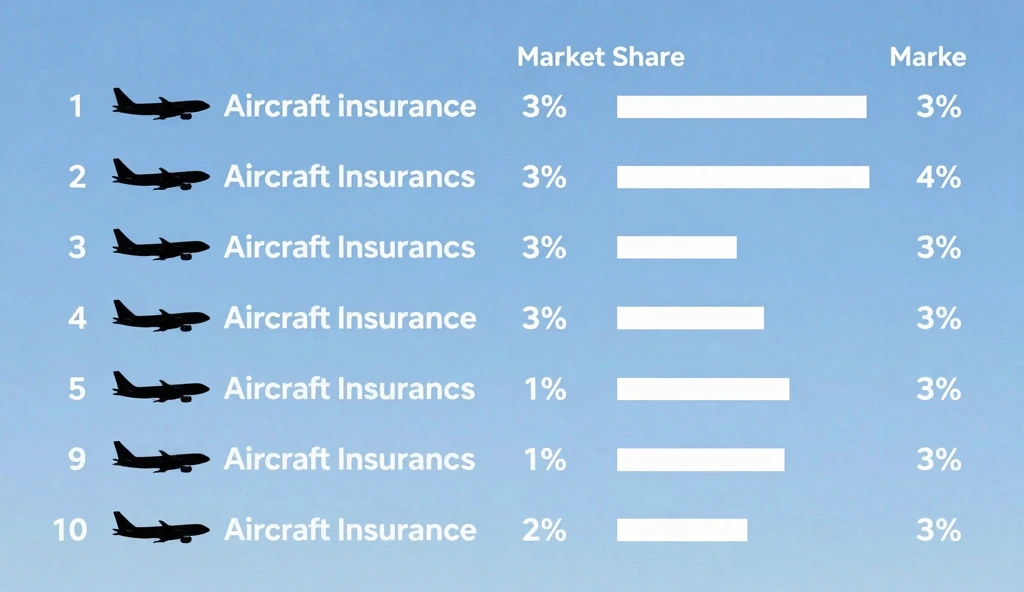
The American aviation insurance market is dominated by a select group of “financial titans” that hold the vast majority of the Market Share. These companies are ranked based on their Direct Premiums Written, which serves as a transparent indicator of their financial muscle and operational reliability. Working with a market leader often means you gain access to superior claims adjusters and more stable policy terms during a “hard” insurance market when capacity shrinks. These ten companies represent the gold standard of protection for pilots across the United States in 2026.
| Rank | Company Name | 2026 Market Share | Core Industry Strength |
| 1 | American International Group (AIG) | 20.1% | Global Commercial & UAS Systems |
| 2 | Chubb Ltd. Group | 12.4% | Luxury Private Client & High-Net-Worth |
| 3 | Sompo Group | 11.2% | Precision Technical Underwriting |
| 4 | Old Republic Group | 11.0% | General Aviation & Industrial Aid |
| 5 | Munich Re Group | 10.3% | Complex Risk Reinsurance & Data |
| 6 | Berkshire Hathaway Group | 8.2% | High-Capacity Liability & Stability |
| 7 | Tokio Marine Holdings | 7.1% | Piston-Engine & Rotorcraft Specialization |
| 8 | American Financial Group | 5.2% | Small Business & Agricultural Flying |
| 9 | AU Holding Co. Group | 3.2% | Non-Standard, Vintage & Experimental |
| 10 | IAT Reins Co. Group | 3.1% | Specialized Excess & Surplus Capacity |
American International Group (AIG)
AIG continues to dominate the sky with the largest Market Share, providing unparalleled technical expertise for everything from regional airlines to cutting-edge autonomous drones. Their stellar A.M. Best Rating ensures that even during a global economic downturn, they possess the necessary liquidity to settle massive, multi-million dollar Aviation Claims instantly.
Chubb Ltd. Group
Chubb is the undisputed preferred choice for the Pleasure and Business (P&B) segment, particularly for owners of high-end turboprops and light business jets. They are globally famous for their “white-glove” claims process and their unique ability to handle the complex, multi-layered needs of high-net-worth individuals and their families.
Old Republic Group
Old Republic Aerospace (ORAE) focuses heavily on the “utility” side of General Aviation (GA), including high-traffic flight schools and industrial aid aircraft. They provide a decentralized underwriting approach where local experts have the authority to make quick, common-sense decisions for their specialized broker partners.
5 Critical Criteria for Evaluating Aviation Insurance Providers
When you are scouting for a carrier, you must look far beyond the initial monthly premium and focus heavily on their Claims Efficiency. In the aviation world, time is literally money; a delay in processing a claim can keep your aircraft grounded for months, leading to massive lost revenue and hangar fees. You should always ask your broker for specific data on how quickly a company typically pays out after a Ground Risk In-Motion incident or a structural failure.
Another vital factor is Underwriting Precision, which determines if the company actually understands the specific risks of your unique flight mission. You also want to ensure the company has a rock-solid Financial Strength profile to survive major industry-wide losses without raising your rates mid-term. Finally, check for Policy Adaptability, as you may need to add specific Policy Endorsements for new pilots, high-tech avionics, or different geographic regions as your business expands.
Aircraft Hull vs. Liability Insurance: What’s the Difference?
The most common question heard in the hangar office involves the difference between hull and liability coverage, which represent the two main pillars of Financial Protection. Liability insurance is designed to protect your assets against Passenger Liability and third-party property damage claims that arise from your operations. If your wing unexpectedly clips a hangar door or a passenger is injured during a rough landing, the liability portion of your policy pays the staggering legal and medical bills.
Hull insurance, on the other hand, protects the physical aircraft itself from damage, theft, or total destruction. This coverage is almost always based on an Agreed Value, which is a pre-determined, fixed amount you and the insurer agree the plane is worth at the policy’s inception. This specific structure avoids the messy “Actual Cash Value” arguments found in car insurance, ensuring you can actually replace your plane if it is lost to a storm or accident.
Aircraft Hull Insurance: Physical damage (zamin par ya hawa mein) ki coverage.
Hull coverage pays for the high-cost physical repairs to your airframe and turbine engines, covering diverse risks like fire, theft, or a sudden “hard landing” incident. It is the only guaranteed way to recover your initial investment if your aircraft is involved in a catastrophic accident that doesn’t result in a total loss.
Aircraft Liability Insurance: Third-party damage aur legal protection ki coverage.
Liability insurance protects your personal or corporate wealth from being seized in a massive lawsuit following an accident involving third parties or bystanders. It is the bedrock of your Risk Mitigation strategy, providing a high-powered legal defense team that would otherwise cost you thousands of dollars per hour.
Common Coverage Highlights and Specialized Add-ons
Standard policies are excellent for basic flying, but most professional pilots require specific Policy Endorsements to cover their unique way of utilizing the aircraft. For instance, Ground Risk Non-Motion is an essential choice for planes that spend 90% of their time parked in a hangar, protecting them from hail or “hangar rash” caused by others. This is often a much more affordable way to get physical damage protection if you don’t fly every single day of the week.
For those who are frequently moving their aircraft on a busy ramp, Ground Risk In-Motion is a necessary upgrade to cover taxiing accidents or towing mishaps. You might also want to look into Hangar Keeper’s Liability if you occasionally allow a friend or business partner to park their expensive plane in your private space. These specialized layers of protection ensure that your Financial Protection is completely seamless, whether you are cruising at 30,000 feet or tucked safely away in your hangar.
Aircraft Types Covered: From Single Engine to Commercial Jets
The cost of your aircraft insurance policy is heavily influenced by the specific Make and Model (M&M) of the aircraft you choose to operate. A simple Cessna 172 used for Pleasure and Business (P&B) is priced and underwritten very differently than a transcontinental, ultra-long-range Gulfstream jet. Insurers group these aircraft into specific risk categories based on their maximum takeoff weight, approach speed, and the number of engines they utilize.
| Aircraft Class | Representative Models | Insurance Risk Category |
| Piston Singles | Cessna 172, Cirrus SR22, Beechcraft Bonanza | Standard General Aviation |
| Multi-Engine Turboprops | King Air 200, Pilatus PC-12, TBM 960 | Advanced Individual/Corporate |
| Corporate Business Jets | Bombardier Challenger, Embraer Phenom, Citation | High-Limit Professional |
| Rotorcraft | Bell 407, Robinson R44, Airbus H125 | Specialty High-Precision |
Piston & Turbo Props (Cessna 172, Beechcraft Bonanza).
These aircraft are the staples of General Aviation (GA), where the experience and training of the Pilot in Command (PIC) is the most important rating factor. Insurers want to see that you have consistent, recent “time in type” to prove you can handle the aircraft safely during all phases of flight and weather.
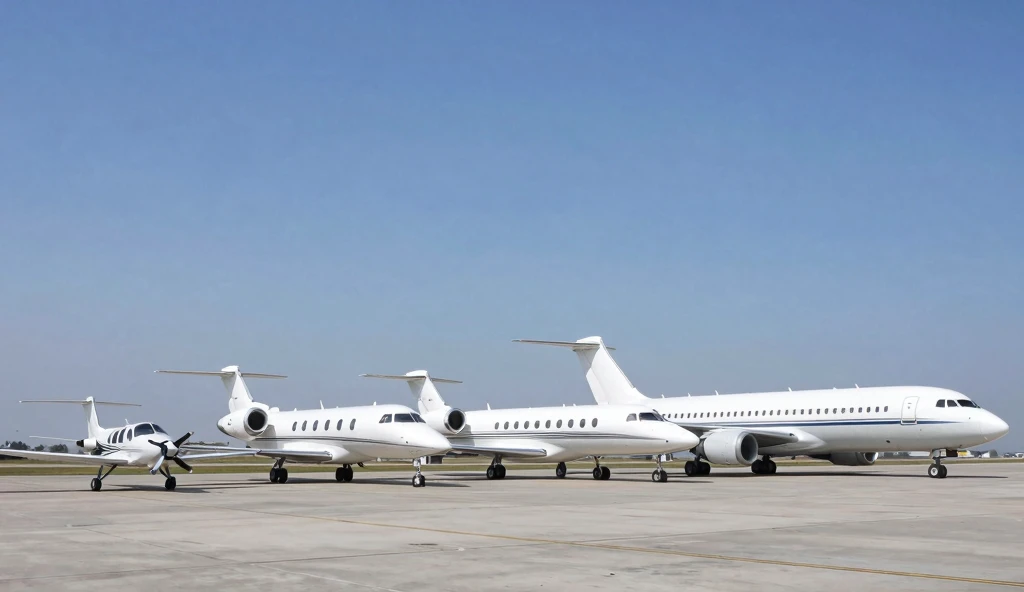
Business & Private Jets (Bombardier Challenger, Gulfstream).
Business jets require significantly higher limits for Passenger Liability because they often carry high-profile executives, sensitive cargo, or large groups of employees. These policies are highly technical and usually require a “dual crew” of two professional, factory-trained pilots to maintain the lowest possible premium rates and highest safety standards.
Specialized Aircraft (Helicopters like Bell, or Amphibious planes).
Rotorcraft and experimental planes require a very niche approach to Aviation Underwriting due to their unique flight characteristics and mechanical complexity. These owners often have to search for specialized “E&S” (Excess and Surplus) carriers that have the specific technical appetite for these high-precision, high-risk flight missions.
How to Calculate Your Aircraft Insurance Premium?
Calculating a premium is a complex mathematical problem that begins with your total accumulated time as Pilot in Command (PIC). The more hours you have logged, the lower your statistical risk of a pilot-error accident, which almost always leads to a lower annual bill from the carrier. Insurers also look closely at your time in the specific Make and Model (M&M) to ensure you aren’t a “newbie” operating a complex, high-performance machine you aren’t yet comfortable with.
The final price also includes your chosen Deductible, which you can strategically adjust to find a balance between monthly premium cost and out-of-pocket risk. Larger commercial fleets often choose a much higher Deductible to significantly lower their Direct Premiums Written and save on their annual operating costs. Always remember that your ongoing pilot training and annual simulator check-rides are the best ways to keep your insurance costs from spiraling out of control as you age.
The Role of Brokers in Aircraft Insurance Placement
In the small, specialized world of aviation, a dedicated broker is your most important ally for finding the best Market Share leaders for your needs. They know which underwriters are currently “hungry” for your specific type of aircraft risk and which ones have recently raised their rates due to losses. A broker’s primary job is to create a winning placement strategy that secures the most comprehensive coverage for the most competitive price.
“A pilot who tries to negotiate their own insurance is like a doctor who performs their own surgery—it’s rarely a successful or painless idea.” — Senior Aviation Broker.
Brokers also help you navigate the A.M. Best Rating of different carriers to ensure you aren’t buying a “cheap” policy from a company that might not be around to pay your claim. They act as your powerful advocate during a claim, using their professional leverage to ensure you receive a fair, fast, and transparent settlement. In 2026, the best brokers are using advanced data analytics to predict rate hikes and market shifts before they ever happen to your fleet.
Conclusion: Making an Informed Choice for Your Aviation Assets
Securing the right aircraft insurance is the final and most important step in your professional flight planning process. By choosing a carrier with a strong Market Share and a high A.M. Best Rating, you are buying the ultimate peace of mind for you and your family. Never skimp on your Financial Protection, as the cost of a single accident can far exceed the price of a lifetime of insurance premiums.
As you move forward into the 2026 flying season, keep your pilot logs meticulously updated and always be completely honest during the Aviation Underwriting process. Your transparency helps the insurer provide the best possible Risk Mitigation for your specific flying style and mission profile. Stay safe, keep your wings level, and ensure you have the best “shield in the sky” before you ever push the throttle forward for your next takeoff.
FAQs
How do I choose between different hull coverage options?
You should generally opt for Agreed Value rather than “Actual Cash Value” to avoid depreciation arguments during a total loss. This ensures that the Financial Protection.
What is the best way to ensure fast Claims Efficiency?
To speed up the process after a bird strike or a hard landing, you should keep meticulous digital records of your pilot logs and clear photos of your aircraft’s condition.
Do I need Non-Owned Aircraft Insurance if I only rent occasionally?
Yes, because most flight school policies are designed to protect the school’s Aviation Assets, not your personal bank account. This specialized Renters Insurance is a vital layer of Risk Mitigation.
Does my pilot experience in a specific Make and Model (M&M) affect my rates?
Absolutely, as insurers view “time in type” as the leading indicator of safety and mission success. The more hours you log in a specific airframe, the more the Aviation Underwriting.