
Introduction
Auto insurance in 2026 feels more complex than ever. Rates fluctuate, policies evolve, and new vehicle technology reshapes pricing models. If you drive daily, you’ve likely noticed the steady climb in premiums. Understanding auto insurance coverage, pricing variables, and hidden savings opportunities gives you control instead of confusion.
More importantly, the right auto insurance policy protects your financial stability. A single accident can cost thousands. However, informed drivers reduce expenses without sacrificing protection. This guide breaks everything down in practical language so you can make confident, money-saving decisions.
Why Auto Insurance Rates Continue to Rise in 2026
Insurance premiums increase because claim costs keep rising. Repair shops now handle sophisticated sensors and computerized components. Even minor accidents require recalibration. As a result, insurers adjust auto insurance rates to offset higher payouts.
Additionally, extreme weather events intensify nationwide. Floods, hailstorms, and hurricanes damage thousands of vehicles annually. When insurers absorb large-scale losses, pricing models shift. Those adjustments directly affect your renewal premium.
How Advanced Vehicle Technology Impacts Insurance Costs
Modern cars resemble rolling computers. Features like lane assist and adaptive cruise control improve safety. However, repairing these systems costs far more than traditional mechanical fixes.
For example, replacing a bumper may require sensor recalibration. That process increases labor expenses significantly. Consequently, vehicles equipped with advanced driver-assistance systems often carry higher car insurance premiums.
The Real Influence of Inflation on Auto Insurance Premiums
Inflation doesn’t just raise grocery prices. It also inflates auto parts, labor, and medical expenses. When repair bills climb, insurers revise risk calculations.
Medical claims particularly affect liability coverage costs. Hospital services grow more expensive yearly. As insurers compensate injured drivers, premium adjustments inevitably follow.
Understanding Liability Coverage: What It Truly Protects
Liability insurance forms the backbone of every auto insurance policy. It pays for injuries and property damage you cause in an accident. Most states mandate minimum limits.
However, minimum requirements often fall short during serious accidents. If damages exceed your limit, you pay the difference. Increasing liability coverage protects savings and future income.
Collision vs Comprehensive Coverage: Key Differences Explained
Collision coverage pays for repairs after accidents involving another vehicle or object. Comprehensive insurance covers theft, vandalism, and natural disasters.
Together, they form what many call “full coverage.” Choosing both ensures broad protection. Still, evaluating your vehicle’s value helps determine whether this investment makes financial sense.
Full Coverage Auto Insurance: Is It Worth the Extra Cost?
Full coverage combines liability, collision, and comprehensive protection. Although premiums rise, financial exposure decreases dramatically.
If you lease or finance your vehicle, lenders typically require full protection. For older cars with low market value, liability-only auto insurance may prove more economical.
Minimum State Requirements vs Recommended Coverage Limits
Each state sets different insurance mandates. Some require personal injury protection, while others focus primarily on liability.
Yet minimum coverage rarely shields significant assets. Financial advisors often recommend higher limits to protect homes, savings, and future earnings from lawsuits.

The Hidden Personal Factors That Increase Your Premium
Driving history plays a major role. Tickets and accidents increase risk perception. Insurers also evaluate credit-based insurance scores in many states.
Additionally, age and experience influence pricing. Younger drivers statistically file more claims. Consequently, they often face higher auto insurance premiums.
How Location and ZIP Code Affect Your Insurance Rate
Where you live matters. Urban areas experience more accidents and theft incidents. That increased risk raises pricing.
Meanwhile, rural regions often report fewer collisions. As a result, drivers in smaller towns frequently enjoy lower car insurance rates compared to metropolitan residents.
Credit Scores and Auto Insurance: What You Should Know
Many insurers incorporate credit-based scoring models. Studies show correlations between credit behavior and claim frequency.
Maintaining strong credit can reduce your premium. Paying bills on time and lowering debt improves financial stability and potentially lowers auto insurance costs.
7 Smart Strategies to Lower Your Auto Insurance Premium
First, compare quotes annually. Loyalty doesn’t always guarantee savings. Second, raise deductibles responsibly to reduce monthly payments.
Third, bundle home and auto policies. Fourth, ask about safe-driver discounts. Fifth, complete defensive driving courses. Sixth, reduce annual mileage if possible. Finally, maintain a clean record to secure long-term savings.
How to Compare Auto Insurance Quotes the Right Way
Focus on identical coverage limits when comparing quotes. Different deductibles distort price comparisons.
Review customer service ratings as well. Low premiums lose value if claims service disappoints. Always balance affordability with reliability.
Best Auto Insurance Discounts You May Not Be Using
Many insurers reward safe drivers through telematics programs. These systems monitor driving habits and offer performance-based discounts.
Students with high GPAs often qualify for academic savings. Military members, federal employees, and multi-car households may also access valuable discount opportunities.
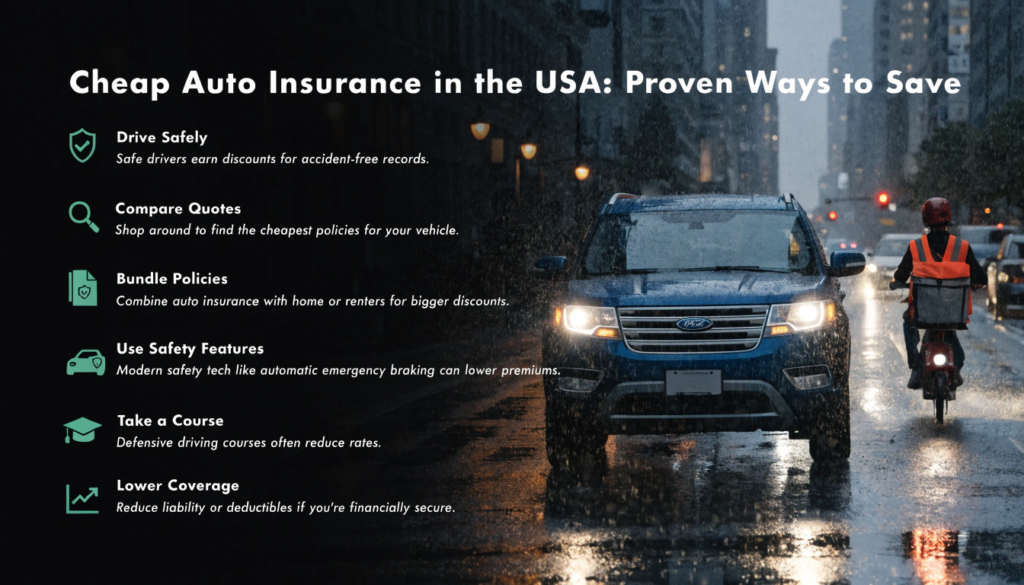
Cheap Auto Insurance in the USA: Proven Ways to Save
Affordable coverage exists for informed drivers. Shopping early before renewal deadlines increases negotiating power.
Additionally, maintaining continuous coverage prevents lapse penalties. Insurers often reward drivers who demonstrate long-term responsibility.
Auto Insurance for High-Risk Drivers: Rebuilding Your Record
High-risk drivers face steep premiums after violations or DUI convictions. However, improvement remains possible.
Completing state-approved driving programs signals responsibility. Avoiding further infractions gradually lowers your risk profile and improves eligibility for better rates.
What Happens During the Auto Insurance Claim Process
After an accident, notify your insurer promptly. An adjuster evaluates damages and reviews documentation.
Repair estimates follow inspection. Once fault determination concludes, the insurer issues payment according to policy limits. Understanding this process reduces stress during unexpected events.
Steps to Take Immediately After a Car Accident
First, ensure everyone’s safety. Contact emergency services if injuries occur. Exchange insurance information calmly.
Next, document the scene with photos. Collect witness statements if available. Quick, organized action strengthens your claim and protects your rights.
Usage-Based Auto Insurance: Can Telematics Save You Money?
Usage-based programs track driving habits such as speed and braking. Safe drivers often receive personalized discounts.
However, aggressive driving patterns may increase rates. Before enrolling, evaluate whether your habits align with potential savings opportunities.
Top Factors Insurance Companies Use to Calculate Risk
Insurers analyze claim history, driving behavior, vehicle type, and location. Each factor contributes to a complex risk profile.
Luxury vehicles typically cost more to insure due to expensive repairs. Similarly, high-performance cars often carry higher premiums because of increased accident risk.
How to Choose the Best Auto Insurance Company in 2026
Strong financial stability ensures reliable claims payments. Look for insurers with high customer satisfaction ratings and responsive digital tools.
Price matters, yet service quality matters more during emergencies. A balanced evaluation of coverage, cost, and reputation leads to smarter long-term decisions.
Conclusion
Auto insurance in 2026 demands awareness and strategy. Rising repair costs, inflation, and evolving technology reshape premium calculations nationwide. However, informed drivers maintain control.
By understanding coverage options, comparing quotes wisely, and leveraging available discounts, you reduce expenses without sacrificing protection. Smart decisions today create financial security tomorrow. When you approach auto insurance strategically, you transform it from a burden into a powerful safeguard for your future.
Frequently Asked Questions (FAQs)
What is the minimum auto insurance required in the U.S.?
Each state sets its own minimum auto insurance requirements, usually focused on liability coverage. Most states require bodily injury and property damage liability. However, minimum limits often don’t fully protect your assets after a serious accident.
How can I lower my auto insurance premium quickly?
Start by comparing multiple quotes. Increase your deductible if you can afford a higher out-of-pocket cost. Ask about auto insurance discounts such as safe-driver rewards, multi-policy bundles, or low-mileage programs.
Is full coverage auto insurance worth it?
Full coverage works best for newer or financed vehicles. It combines liability, collision, and comprehensive protection. If your car has low market value, liability-only coverage may provide better cost efficiency.
Why did my auto insurance rate increase without an accident?
Premiums can rise due to inflation, increased repair costs, or higher claim activity in your area. Even if your driving record remains clean, external risk factors influence overall car insurance rates.
Does my credit score affect auto insurance pricing?
In many states, insurers use credit-based insurance scores to assess risk. A higher score often leads to lower premiums. Improving payment history and reducing debt may help decrease auto insurance costs.
What happens if I let my auto insurance policy lapse?
A lapse signals higher risk to insurers. When you reinstate coverage, premiums often increase. Maintaining continuous auto insurance coverage protects both your finances and your future rates.
How does usage-based auto insurance work?
Usage-based programs track driving habits through telematics devices or mobile apps. Safe behaviors like smooth braking and limited nighttime driving can earn personalized discounts.